
Tech EU News
euronews futuris – New life for old metal mines

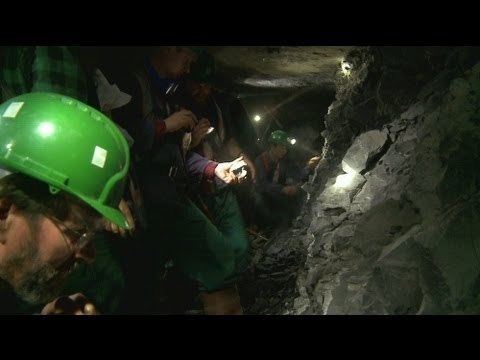
http://www.euronews.com/ The European Union imports huge amounts of metal. Yet buried deep in Europe’s bowels is a treasure trove of copper, zinc and other precious metals.
Researchers have been digging deep to uncover ways to put European mining back on the map and they’re not short of ideas.
Europe’s deepest metal mine is seemingly unfathomable, at 1,430 meters.
For forty years, Pyhäsalmi mine has been a rich source of copper, zinc and pyrites.
However the countdown to its closure has already begun as Pihlaja, a Mining Engineer, at Pyhäsalmi mine explains:
“We currently produce around 1,4 million tons of ore per year but if the metal prices stay at the current level, we won’t be able to maintain the mine beyond the end of 2018”.
Metal mining throughout Europe is facing similar problems but scientists are becoming a regular fixture at the Pyhäsalmi Mine in an attempt to breath new life into an old industry.
Juha Kaija, a Finnish Geologist talks about his research:
“Metal resources exist in Europe but extracting them is socially and economically challenging. Our research aims to develop more efficient exploration methods and also at imagining new ways to re-use mining waste materials to give European metal mining a fresh new impetus”.
Finding new ores in active or abandoned metal mines is the researchers´first aim and that is no mean feat, especially for old, deep deposits.
Timo Mäki, Chief Geologist, at Pyhäsalmi mine describes the difficulties:
“Here in Finland and also in Sweden, the bedrock is very old, 2 billion years, or even older.
So the rocks have been folded, folded again, faulted, moved. So something (the ore) that you expect to have there might have been moved somewhere else. Following the geological structures, the rock types at depths of 2 kilometers is very difficult.
That is why researchers have developed sophisticated 3D models. They are aimed at helping to better understand the complex geology that envelopes the ore.
Marcello Imaña Osorio, a Geologist at
Pyhäsalmi Mine explains:
“What you see here in red are what we call “reflective zones”, underground regions whose material has a different density from the surrounding bedrock. That different density is one of the properties of the ore we are looking for. So these 3D maps help us to precisely spot those regions and calculate angles and distances for more accurate exploration drilling”.
However, researchers have even bolder ideas to bring the luster back to metal mining and they are more than happy to share them in open forums.
Swedish geologists have introduced sophisticated 3D underground mapping, to make drilling easier.
Pär Weihed, Geologist, from the University of Lulea talks about the benefits of this new technological development:
“Diamond drilling is a very expensive business. So if you can get more robust computer models, so you need to drill less holes in order to target the mineral spots, then you will reduce the expenses needed to drill those deep holes. What we can describe in a 3D model like this is the rocks units, structures which could be important for guiding where ores are located in the crust. So it is all about chemical and physical properties of the rocks”.
French researchers meanwhile, have shown the first ever interactive online database, detailing the metal resources deep underground in Europe.
Daniel Cassard, Geologist at BRGM talks about how even waste can be re-used:
“Each enlargement is represented by just over 40 fields in a database. So it’s described in extreme detail: its type, geological formation but also the production, reserve, and resource levels too. Then it does the same for mine waste. Why waste? Well because the waste can contain substances that were rejected at the time, because no one knew what to do with it or didn’t have the technology to extract anything valuable and now we realise that waste can be used for the components of your mobile for example.
“Therefore these so-called European wide critical substances – some say they’re strategic, others call them green metal ‘because they reduce the consummation of energy “.
Scientists have developed a method to transform iron-rich mineral waste into materials for construction and painting.
Eberhard Janneck, Chemist, G.E.O.S explains:
“In this bottle I have a typical example of mining shaft water, full with acids and sulfates. The only creatures that can live in this environment are bacteria that are able to oxidise iron.
Find us on:
Youtube http://bit.ly/zr3upY
Facebook http://www.facebook.com/euronews.fans
Twitter http://twitter.com/euronews
source
The increase in energy prices in Austria accompanied by soaring inflation has prompted locals to return to burning wood.
READ MORE : https://www.euronews.com/2022/10/03/demand-for-firewood-soars-in-austria-amid-gas-supply-fears
Subscribe to our channel: https://www.youtube.com/c/euronews?sub_confirmation=1
Watch our LIVE here: https://www.youtube.com/c/euronews/live
Subscribe to our thematic channels:
NoComment: https://www.youtube.com/c/nocommenttv?sub_confirmation=1
Euronews Green: http://bit.ly/2sMsaDB
Euronews Next: https://www.youtube.com/c/EuronewsNext?sub_confirmation=1
Euronews Travel: https://www.youtube.com/c/EuronewsTravel?sub_confirmation=1
Euronews is available on YouTube in 12 languages: https://www.youtube.com/user/euronewsnetwork/channels
#World
source
Solar fashion and vertical solar farms are the future with this new material that doesn’t need direct sunlight to make electricity.
READ MORE : https://www.euronews.com/2022/02/19/solar-panels-built-from-waste-crops-can-make-energy-without-direct-light
Subscribe to our channel: https://www.youtube.com/c/euronews?sub_confirmation=1
Watch our LIVE here: https://www.youtube.com/c/euronews/live
Subscribe to our thematic channels:
NoComment: https://www.youtube.com/c/nocommenttv?sub_confirmation=1
Euronews Green: http://bit.ly/2sMsaDB
Euronews Next: https://www.youtube.com/c/EuronewsNext?sub_confirmation=1
Euronews Travel: https://www.youtube.com/c/EuronewsTravel?sub_confirmation=1
Euronews is available on YouTube in 12 languages: https://www.youtube.com/user/euronewsnetwork/channels
#EcoInnovation
source
The beaches of the renowned holiday destination the Isle of Wight are contaminated with human waste. The issue has led to people getting sick.
Subscribe to our channel: https://www.youtube.com/c/euronews?sub_confirmation=1
Watch our LIVE here: https://www.youtube.com/c/euronews/live
Subscribe to our thematic channels:
NoComment: https://www.youtube.com/c/nocommenttv?sub_confirmation=1
Euronews Green: http://bit.ly/2sMsaDB
Euronews Next: https://www.youtube.com/c/EuronewsNext?sub_confirmation=1
Euronews Travel: https://www.youtube.com/c/EuronewsTravel?sub_confirmation=1
Euronews is available on YouTube in 12 languages: https://www.youtube.com/user/euronewsnetwork/channels
#Destinations
source
Music publishing company alleges the streaming service failed to get a proper licence allowing it to distribute thousands of songs, including those of Tom Petty, Neil Young and the Doors.…
READ MORE : http://www.euronews.com/2018/01/03/music-streaming-service-spotify-hit-with-1-6-bln-copyright-lawsuit
What are the top stories today? Click to watch: https://www.youtube.com/playlist?list=PLSyY1udCyYqBeDOz400FlseNGNqReKkFd
euronews: the most watched news channel in Europe
Subscribe! http://www.youtube.com/subscription_center?add_user=euronews
euronews is available in 13 languages: https://www.youtube.com/user/euronewsnetwork/channels
In English:
Website: http://www.euronews.com/news
Facebook: https://www.facebook.com/euronews
Twitter: http://twitter.com/euronews
Google+: http://google.com/+euronews
VKontakte: http://vk.com/en.euronews
source
You might think planes look the same as 60 years ago but subtle engineering advances have made big changes. Let’s look under the bonnet to find out what they are.
READ MORE : https://www.euronews.com/2021/11/16/under-the-bonnet-how-have-planes-changed-over-time
Subscribe to our channel: https://www.youtube.com/c/euronews?sub_confirmation=1
Watch our LIVE here: https://www.youtube.com/c/euronews/live
Subscribe to our thematic channels:
NoComment: https://www.youtube.com/c/nocommenttv?sub_confirmation=1
Euronews Green: http://bit.ly/2sMsaDB
Euronews Next: https://www.youtube.com/c/EuronewsNext?sub_confirmation=1
Euronews Travel: https://www.youtube.com/c/EuronewsTravel?sub_confirmation=1
Euronews is available on YouTube in 12 languages: https://www.youtube.com/user/euronewsnetwork/channels
#Mobility
source
Latest news bulletin | July 11th, 2026 – Midday
Continuing The Family Tradition… Milaniia Kokhan 🇺🇦
Fan parks across England and Argentina 🎥⚽
Sergio Davila: Oceanic Craft for S/S 27 | Milan Men Fashion Week
Europe Today #148, in less than 60 seconds
He’s just getting started… 🔥 #Rieti2026
Their centre-half said it was a rubbish penalty in slightly different terms
Where Is The EU’s Population Growing The Most?
Last lap SPRINT! 🔥 Day one highlights | 2026 European Athletics U18 Championships
Viktor & Rolf: Mirrored Rituals for F/W 26-27 | Paris Haute Couture Fashion Week
Von der Leyen’s trip to Kyiv concludes with an EU-Ukraine drone deal
Jamie O’Hara’s England player ratings 🏴🇦🇷
Latest news bulletin | July 15th, 2026 – Morning
Everybody is happy for Doku
National sovereignty equals ‘sending gifts to US and China’, former Italian PM Letta tells Euronews

euronews U talk – Education: Balancing costs and benefits of the Bologna process

Battery power: the hunt for stable renewable energy storage

Video: Vigilantes chase, whip women in ‘anti-prostitution’ raid on Peru night club

G7 summit looks to bolster recovery – economy

Hamas elects Yahya Sinwar as Gaza leader
🏴 EFL CHAMPIONSHIP STADIUMS 2025/26
INVINCIBLE. 🏆 | The best of Granit Xhaka for Bayer Leverkusen in 2023/24 🔥

Go Behind The Scenes with Vanessa Hessler for Clips Fall/Winter 2012-13 Campaign Shoot | FashionTV
Miedema strikes to get Arsenal back on track ⚡ | Arsenal 1-0 Everton | WSL highlights

“There’s got to be a clear-out” 😤 | What’s next for Rangers after Celtic defeat?
Carlsberg CEO

Student trip to Mallorca fuels Spanish COVID-19 outbreak
Electric anti-rape underwear developed to protect women in India
Why Sweden’s Krona is Outperforming the Euro

Victoria’s Secret Fashion Show 2013-2014 ft Taylor Swift & Adriana Lima| FashionTV
-
 Tech EU News2 years ago
euronews U talk – Education: Balancing costs and benefits of the Bologna process
-
 Tech EU News2 years ago
Battery power: the hunt for stable renewable energy storage
-
 Another Europe News2 years ago
Video: Vigilantes chase, whip women in ‘anti-prostitution’ raid on Peru night club
-
 Another Europe News2 years ago
G7 summit looks to bolster recovery – economy
-
 Tech EU News2 years ago
Hamas elects Yahya Sinwar as Gaza leader
-
Sports EU12 months ago
🏴 EFL CHAMPIONSHIP STADIUMS 2025/26
-
Sports EU2 years ago
INVINCIBLE. 🏆 | The best of Granit Xhaka for Bayer Leverkusen in 2023/24 🔥
-
 Fashion2 years ago
Go Behind The Scenes with Vanessa Hessler for Clips Fall/Winter 2012-13 Campaign Shoot | FashionTV
-
Sports EU2 years ago
Miedema strikes to get Arsenal back on track ⚡ | Arsenal 1-0 Everton | WSL highlights
-
 Sports EU2 years ago
“There’s got to be a clear-out” 😤 | What’s next for Rangers after Celtic defeat?
You must be logged in to post a comment Login