Another Europe News
euronews reporter – Bulgaria steps up fight against organised crime

http://www.euronews.com/ Bulgaria has again been refused entry into the Schengen zone.
Back in July, Sofia was slammed by the EU in a highly critical report. It said organised crime in Bulgaria was unique compared with other EU nations because it exercises a deep influence over the country’s economy.
Kidnappings, contract killings, sex, drugs and cigarette trafficking… Bulgarian gangs are highly organised and well connected, both to shady Bulgarian businessmen and fellow criminals around the world.
Kiro Kirov has experienced the Bulgarian mafia first hand.
An entrepreneur who made big money importing construction machinery, he was kidnapped by a gang a few years ago.
He was held in violent conditions for 17 days until his son paid the half million euro ransom.
“The kidnappers used a jeep, a big car,” he tells us. “Their faces were covered. They took me by force: one gangster drove the jeep while the other was violently beating me. I tried to get out of the car, I tried to smash the jeep’s window, but to no avail. I was brought to a tiny room, you wouldn’t call it a room, it was so small – 2 meters by 1,5 metres, and you couldn’t stand up straight. There was a mattress and I was handcuffed against the wall.”
Sharing some moments with his pet bird “Koko”, Kirov thinks twice before answering our question: does he feel safe, today, in Bulgaria?
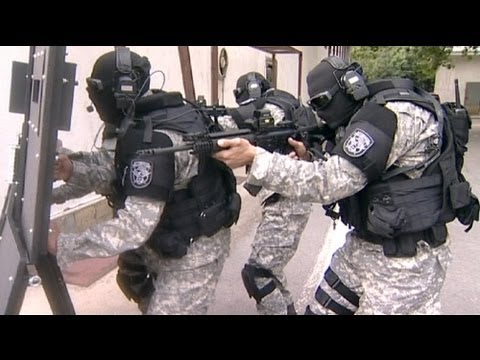
Bulgaria’s Special Counter-terrorism Unit, the SOBT, does a great job, he says. But more needs to be done on other levels to eradicate organised crime.
“Many mistakes are being made, everywhere,” says Kirov. “Often, criminals are arrested but they are set free by judges the very next day. Then they shoot each other or go on to commit more crime. Something’s not working here in Bulgaria. The state should do a better job of protecting its citizens.”
According to Kirov, the police, investigators and prosecutors need to work more closely together – an opinion shared by experts.
According to socialist opposition leader and former prime minister Sergey Stanishev, the problem is not the SOBT, who are perfectly well trained. It’s the government, which is responsible for staging events in order to impress voters ahead of elections.
“The minister of the interior proudly announced that they had destroyed 660 organised criminal groups, but this is actually the small fish. The next day, the European Commission mentions in their report that there are 12 big organised crime groups who are apparently functioning quite successfully in Bulgaria, with an annual turnover of billions,” says Stanishev.
“The government is good at that, I mean actions, arresting someone, accusing them. But if you don’t have the results in courts, if you don’t have enough evidence, if you don’t have the efficiency, it is more like a PR-action because the priority for this government is how it looks,” he adds.
It’s not just the EU which is tired of expecting results. Todor Kolarov resigned in February as head of Bulgaria’s anti-mafia agency.
He stepped down in protest at what he saw as a lack of political will to combat high-level corruption.
What’s needed, he says, is confiscations:
“This (confiscation) is a tool to prevent crime from happening. If you go after big fishes, and if you are successful against the big fish, the small fish will think twice,” says Kolarov. “If you leave organised crime and just believe that it will disappear, that it will become part of the white business, that is not going to happen. And when you decide to effectively combat it, you may actually unleash civil war in your own country.”
The challenge is to clean up the judiciary and appoint corruption-free judges and prosecutors according to Bulgaria’s new Justice Minister.
Diana Kovatcheva is the former head of the Bulgarian branch of “Transparency International”, an NGO dedicated to increasing government accountability.
She is also introducing new confiscation laws.
“Perpetrators of serious crimes like organised crime and corruption will not be able to reinvest the funds taken by such serious crimes, because they will be confiscated,” she says.
“And this is a totally new approach in European terms as well, where funds and these assets will be confiscated on a non-conviction base principle, meaning that this will be a civil procedure without conviction and all the assets that cannot be proven of origin will be confiscated.”
After the fall of communism, Bulgaria went through a very brutal transition period, which set the standard.
Find us on:
Youtube http://bit.ly/zr3upY
Facebook http://www.facebook.com/euronews.fans
Twitter http://twitter.com/euronews
source
@SashaTheCat_1
March 28, 2024 at 1:31 am
Dublin is unsafe? no way!
@SashaTheCat_1
March 28, 2024 at 1:31 am
Why is Bulgaria very poor, corrupt and unsafe?!
@robertsobolevsky4248
March 28, 2024 at 1:31 am
stop say shit boy
@mitkovipazzz
March 28, 2024 at 1:31 am
Станишев от политика не разбира ама е научил английския!
@TranceElevation
March 28, 2024 at 1:31 am
By this criteria you should wonder as well why south italy was accepted.
But anyway, to answer your question…they were accept to prevent them taking the route versus russia.
@svachev
March 28, 2024 at 1:31 am
ТОЯ БОКЛУК СТАНИШЕВ ПАК ЛИ ИСКА ДА СЕ НАМЪРДА В ВЛАСТТА !!! ТОВА СТАНЕ ЛИ АЗ ИЗЛИЗАМ НА ПРОТЕСТ !!
@caboose6309
March 28, 2024 at 1:31 am
FUCK SOBT
@tsetsoooo
March 28, 2024 at 1:31 am
both true and wrong, yes we have a weak econnomy, but we need to eradicate corruption and organised crime because all the "White" money is not enough Besides our self-effiecents was hurt ALOT when we entered the EU. We closed more than half of our Atomic Reactors (Electric Bills now x2.5) and lots of new laws hurt the small buisnesses(upon entering).
@coefalfa
March 28, 2024 at 1:31 am
I realy don't see the link between the crime and the entry into the Schengen zone. Why do they speak only about the crime in Bulgaria, it's ridiculous. Yes the mafia has a bigger influance over the economy but it's not because the mafia is big, but because the economy of this country is weak. In Europe there is criminal group in every corner. Lots of underage have drug problems, so I think the fight against the mafia must start first fromthe heart of EU itself before it reach Bulgaria.
@Tarikatlar
March 28, 2024 at 1:31 am
omg, you interview a communist on these issues? Stanishev is a thief and a sheep in wolfs clothing! Shame on you, euronews. One or two of these groups came out of bsp/bkp! SHAME SHAME SHAME!